-
1. What is the most overlooked factor when selecting a magnetic flow meter?
-
2. Why does Yokogawa magnetic flow meter calibration matter more than you think?
-
3. How do differential pressure sensors and capacitive sensors compare for process control?
-
4. What common mistake do engineers make when specifying Yokogawa products?
-
5. Is the durability of ifm photoelectric sensors really that much better than others?
-
6. How can I avoid hidden costs when purchasing Yokogawa flow meters?
-
7. What should I check before sending a Yokogawa pressure transmitter for calibration?
-
8. What's the one thing I wish I knew about Yokogawa's portfolio?
I've been working with industrial instrumentation for about 7 years now. In that time, I've made enough mistakes to fill a small binder. The worst one? A $3,200 order for Yokogawa pressure transmitters where I skipped the calibration verification step. Straight to rework, 2-week delay, and a very uncomfortable meeting with my manager.
This FAQ covers the questions I wish someone had answered before that mistake—and several others that followed. If you're specifying, buying, or maintaining Yokogawa products, these are the gotchas that don't show up on spec sheets.
1. What is the most overlooked factor when selecting a magnetic flow meter?
Lining material compatibility. I once specified a PTFE-lined Yokogawa magnetic flow meter for a caustic application without double-checking the temperature limits. The lining softened, the measurement drifted, and we lost a full batch. Cost: roughly $1,800 in wasted product plus a replacement meter. The salesman had mentioned it in passing, but I was in a hurry—classic what-are-the-odds thinking. Now my checklist says: always confirm lining material against both fluid chemistry and maximum process temperature.
2. Why does Yokogawa magnetic flow meter calibration matter more than you think?
Because a 'factory calibrated' meter isn't necessarily accurate for your specific fluid properties. I learned this when our ADMAG AXG showed 3% error on a low-conductivity solution. The Yokogawa calibration certificate said ±0.15%—but that's under reference conditions. Per FTC guidelines (ftc.gov), claims must be substantiated under the conditions they're used. That doesn't mean Yokogawa is misleading; it means your application may need a wet calibration. We now budget an extra $400–600 for site-specific calibration on every magnetic flow meter order.
3. How do differential pressure sensors and capacitive sensors compare for process control?
I've gone back and forth between these two for years. On paper, capacitive sensors (like Yokogawa's DPharp series) offer better long-term stability because there's no mechanical linkage. But differential pressure sensors are more forgiving in dirty or condensing fluids. Here's what I've settled on: if the process is clean and dry, go capacitive. If there's any chance of moisture or particulate, DP with diaphragm seals. I had a bad experience in 2019 using a capacitive sensor on a steam line—the diaphragm ruptured after 6 months. $1,200 replacement plus downtime. Not worth it.
4. What common mistake do engineers make when specifying Yokogawa products?
Assuming the model number tells you everything. I cannot count how many times I've seen someone order a 'Yokogawa EJA530E' pressure transmitter without specifying the output protocol, wetted material, or optional features. Last year, a colleague ordered 10 units for a project, and they arrived with HART protocol instead of the required FOUNDATION Fieldbus. Change orders cost us $850 in restocking fees and a 3-week delay. The lesson: always pull the full datasheet and verify every option code. Yokogawa's product configurator is good, but human eyes are better.
5. Is the durability of ifm photoelectric sensors really that much better than others?
I get this question a lot. We've used ifm photoelectric sensors on about 40 installations over the past 5 years, and compared them to three other brands (not naming names). The short answer: ifm's housings and optics are noticeably more robust in high-vibration and high-humidity environments. But—and this is the part people miss—the real durability difference comes from installation quality. I've seen ifm sensors fail because someone overtightened the mounting bracket, cracking the internal potting. We once had a $350 ifm sensor die after 3 months for exactly that reason. So yes, ifm builds them tough, but if your crew doesn't follow the torque specs, you'll get the same failure rate as cheaper units.
6. How can I avoid hidden costs when purchasing Yokogawa flow meters?
Ask 'what's NOT included?' before 'what's the price?' I learned that lesson after a $4,200 quote for a vortex flow meter that turned into $5,600 after adding the required mating flanges, gaskets, and a grounding ring. The sales rep said 'these are standard accessories'—but they weren't in the original quote. Now I request a full breakdown with line items. The vendor who lists all fees upfront, even if the total looks higher, usually costs less in the end. Per USPS pricing (usps.com, January 2025), a First-Class stamp is $0.73—a simple transparent price. Wish industrial suppliers were that straightforward.
7. What should I check before sending a Yokogawa pressure transmitter for calibration?
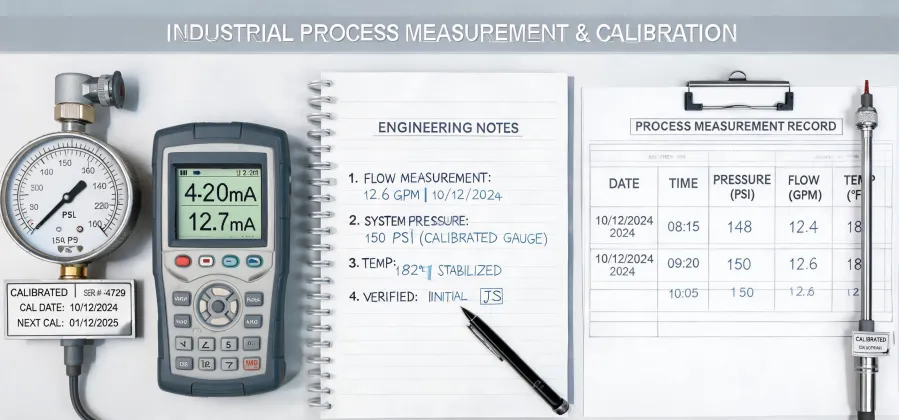
Three things: zero trim history, ambient temperature at installation, and the calibration range set at the factory. A few years ago, I sent in a DPharp EJA110 that had been in service for 2 years. The calibration report came back saying it was within spec, but the field reading was still off. Turns out, the technician had adjusted the zero trim in the field to compensate for a mounting elevation, and the calibration lab didn't reset it. We wasted $300 on the calibration and another 4 hours troubleshooting. Now I always do a zero check before sending it out, and I record the as-found values. That way, I can compare the lab results to what I saw in the field.
8. What's the one thing I wish I knew about Yokogawa's portfolio?
That their optical spectrum analyzers and oscilloscopes are just as capable as their process instruments—but require a different support network. I spent 3 years only buying Yokogawa flow and pressure products. Then in Q3 2024, I needed a high-speed data logger for a power quality study. I almost went with another brand because I assumed Yokogawa only did process control. Turns out, their DL series oscilloscopes are industry standard for power quality analysis. I could have saved about $900 compared to the alternative I was considering. The lesson: don't pigeonhole Yokogawa as 'just pressure and flow.' Their test and measurement division is a hidden gem for lab and field engineers.
